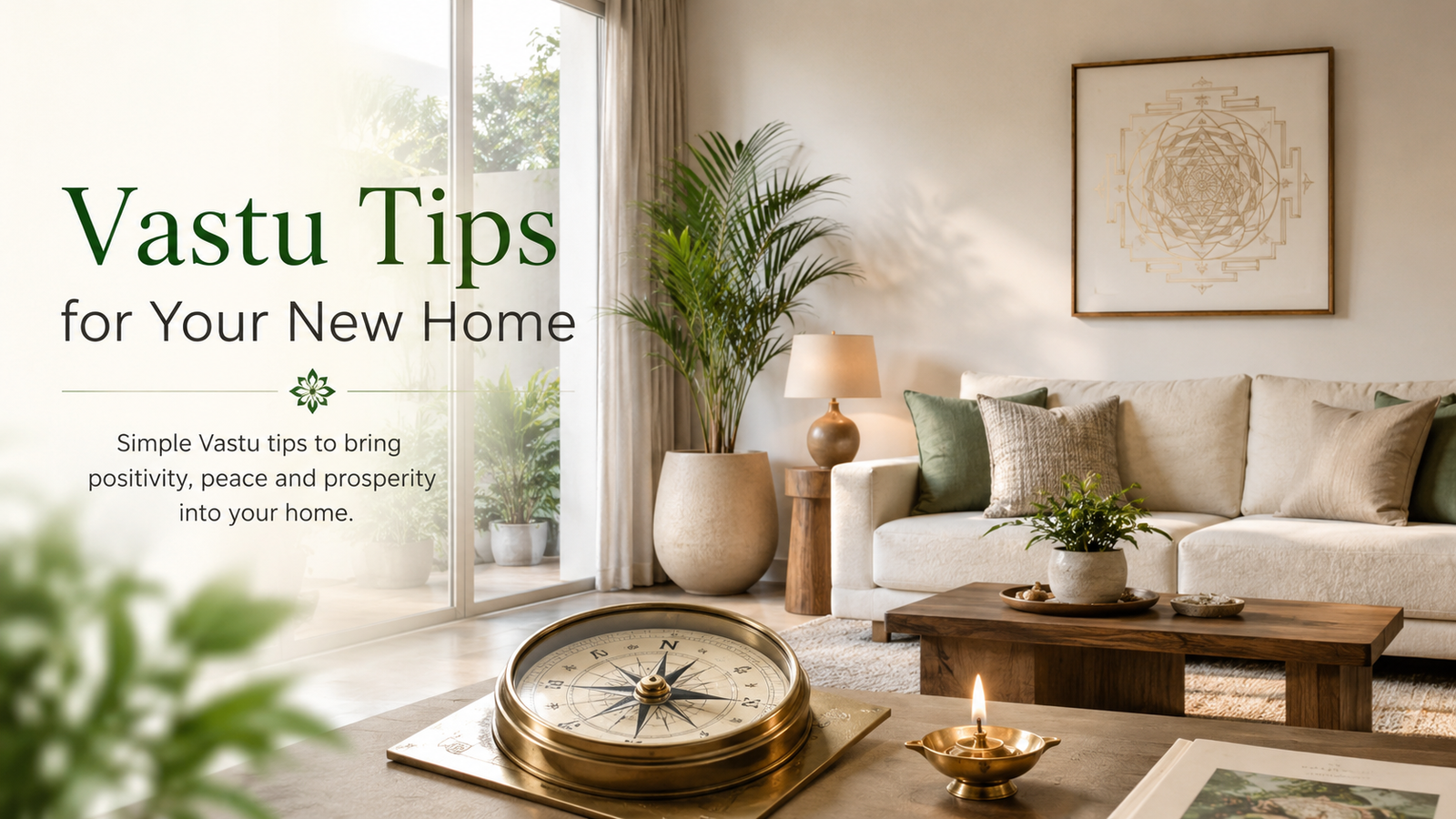
Ask any homebuyer in Pune what mattered to their parents or grandparents while zeroing in on a flat, and Vastu almost always comes up — even among buyers who consider themselves fairly modern in their outlook. It’s not just superstition; for many families, Vastu is about ensuring a home feels balanced, receives good natural light, and supports well-being. And with the festive season around the corner, when a large share of Maharashtrian families prefer to finalise home purchases, Vastu compliance often becomes a deciding factor between two otherwise similar flats.
Here’s a practical, non-alarmist checklist to walk through before you sign on the dotted line.
1. Main Door & Entrance Direction
The main entrance is considered the gateway for energy into the home. North, East, and North-East facing entrances are traditionally considered most favourable. If you’re touring a sample flat, simply ask the sales team for the compass orientation of the unit — most RERA-registered developers can share this from the sanctioned layout plans.
2. Kitchen Placement
The kitchen is ideally positioned in the South-East corner of the home, representing the fire element (Agni). If South-East isn’t available, North-West is considered the next best alternative. A kitchen directly opposite the main entrance or bang in the centre of the home is generally advised against.
3. Master Bedroom Position
The South-West zone is traditionally recommended for the master bedroom, as it’s associated with stability and strength — ideal for the primary decision-makers of the household. Lighter, sun-facing bedrooms toward the East are well-suited for children’s rooms.
4. Pooja Room / Sacred Space
A North-East corner — often called the Ishaan corner — is considered the most auspicious placement for a prayer space, as it’s believed to receive the purest morning light and energy.
5. Toilets & Bathrooms
Vastu principles generally advise against toilets in the North-East zone. West or North-West placements are considered more suitable, and attached bathrooms should ideally not directly face the bed.
6. Balconies & Open Spaces
North and East-facing balconies are favoured for allowing morning sunlight in, which is both a Vastu principle and simply good design — better natural light, lower artificial lighting costs, and improved ventilation.
7. Overall Shape & Symmetry
Square or rectangular floor plans are considered more Vastu-compliant than irregular, cut-corner layouts. This isn’t just tradition — symmetrical layouts genuinely tend to offer better furniture placement and space utilisation.
A Balanced Perspective
It’s worth remembering that Vastu is a guideline, not a rigid rulebook — very few flats in a dense city like Pune will tick every single box perfectly, and that’s completely normal. Most families prioritise the two or three factors that matter most to them (often the entrance direction and kitchen placement) rather than expecting total alignment. If Vastu compliance is important to you, it’s far easier to build it into your search criteria from day one than to try and “fix” a flat after possession.
Why This Matters When You're Shortlisting Flats
A home that aligns with your family’s beliefs — whether that’s Vastu, feng shui, or simply good sunlight and airflow — tends to feel more settled from the very first day you move in. It’s one of those factors that’s hard to quantify on a spreadsheet but shows up in how comfortable a home feels, year after year.
At Probha Group, our residential layouts are thoughtfully planned with entrance orientation, kitchen placement, and natural light in mind, giving families the flexibility to choose homes that align with their beliefs and lifestyle — without compromising on modern design.
Looking for a Vastu-friendly flat in Pune? Connect with Probha Group and our team will help you shortlist units that match your Vastu preferences, budget, and locality.