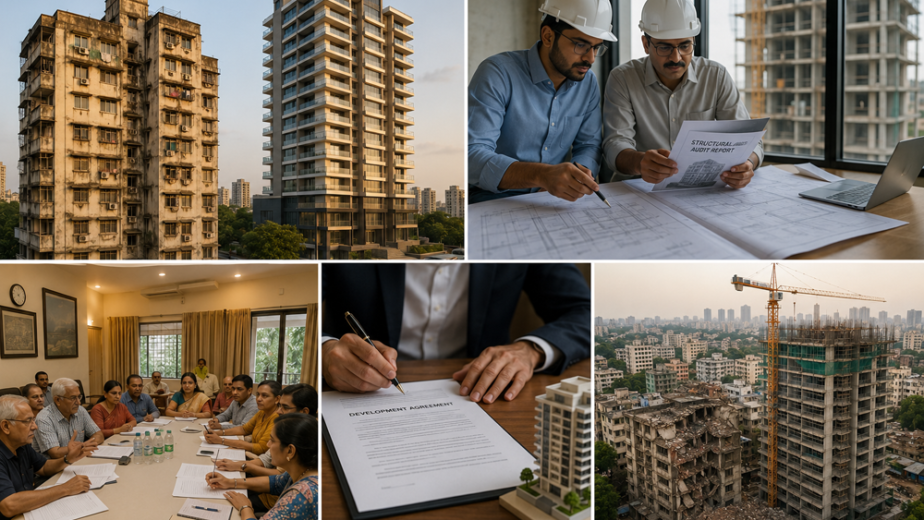
Buying a home is one of the most significant financial commitments most Indian families will ever make. In Maharashtra, you have a powerful statutory framework to protect that commitment — the Real Estate (Regulation and Development) Act, 2016, administered locally by the Maharashtra Real Estate Regulatory Authority (MahaRERA).
But here is the truth: MahaRERA protects you only if you know how to use it. Most homebuyers in Pune check one thing — whether the project is registered — and stop there. That is like checking whether a car has an engine and ignoring the brakes, the tyres, and the service history.
This guide gives you the complete MahaRERA verification checklist — eight specific things to check, step by step, before you pay a single rupee in booking amount.
Why MahaRERA Changed the Rules of Indian Real Estate
Before RERA, Indian homebuyers had almost no statutory protection. Developers could delay projects indefinitely, downgrade specifications from what was promised, divert buyer funds to other projects, and change layouts without any meaningful consequence. Buyers who complained had only civil courts — slow, expensive, and uncertain.
MahaRERA changed this fundamentally. It introduced mandatory project registration, financial escrow requirements, binding timeline commitments, specification disclosure obligations, and a structured grievance mechanism that resolves complaints far faster than civil litigation.
Maharashtra’s MahaRERA implementation is considered among the most rigorous in India. As of 2026, over 43,000 projects have been registered on the MahaRERA portal, and thousands of buyer complaints have been resolved through the authority’s quasi-judicial process.
The 8-Point MahaRERA Verification Checklist
Step 1: Verify Project Registration Status
Go to maharera.mahaonline.gov.in and search for the project by name, developer name, or the MahaRERA registration number the developer has provided. Confirm that the registration status shows ‘New Project’ or ‘Registered’ — not ‘Lapsed’ or ‘Revoked.’ A lapsed registration means the developer cannot legally sell, and any amount paid in a lapsed project is at risk.
For Probha Oasis: MahaRERA Registration No. P52100078161 — verify it yourself directly on the portal.
Step 2: Check the Registered Completion Date
Every registered project must commit to a specific completion date. Check what the developer has registered as their completion date and compare it against the current construction progress visible in the quarterly updates on the same portal. A project that registered a completion date 18 months ago but shows minimal construction progress in its quarterly updates is a red flag — regardless of what the sales team tells you on site.
Step 3: Review the Approved Plans and Layout
The MahaRERA portal displays the approved building plans, layout, and project configuration as filed with the authority. Compare what you are being sold — by brochure, by the site visit, by the floor plan handed to you — against what is registered. Any material difference between the registered plan and what is being marketed should be immediately clarified in writing before any payment.
Step 4: Understand the Escrow Protection
One of RERA’s most important protections is the escrow requirement. Developers must deposit 70% of all buyer funds received into a dedicated escrow account that can only be used for that specific project’s land and construction costs. Ask the developer which bank holds the escrow account and confirm it is operational. This is the protection against a developer diverting your funds to another project.
Step 5: Read the Quarterly Construction Updates
MahaRERA requires developers to update construction progress on the portal every quarter. Review the last four quarterly updates for any project you are seriously considering. Consistent, documented progress is a strong positive signal. Missing updates or updates showing minimal progress relative to the timeline are warning signs that warrant direct conversation with the developer.
Step 6: Check for Pending Litigation or Encumbrances
The MahaRERA registration process requires disclosure of any legal proceedings or encumbrances affecting the project’s land. Review the project’s MahaRERA filing for any litigation disclosures. If anything is disclosed, seek specific legal advice about the nature and likely resolution of the proceeding before committing funds.
Step 7: Verify Promoter Details and Track Record
The MahaRERA portal lists the promoter’s details — directors, entity type, registration. Cross-reference these with what the developer presents in their marketing materials. Then search for the developer’s past completed projects on the portal and, where possible, visit or contact residents of those completed projects. Completed project track record is the most reliable predictor of whether your project will be delivered as promised.
Step 8: Review the Builder-Buyer Agreement Before Signing
RERA mandates that the builder-buyer agreement (BBA) must be in a prescribed format. Before signing any BBA or paying beyond a token booking amount, review the agreement for: the registered completion date (must match MahaRERA filing), the specification schedule (must be specific — not generic), the penalty clause for delay (RERA mandates interest payment to buyers for delay), and the defect liability period for post-possession issues.
Any developer who resists sharing the full BBA before you commit funds is a developer worth approaching with caution.
What Red Flags Actually Look Like
In our experience of Pune’s residential market, the most common situations where buyers regret skipping due diligence are:
- Projects where the sales team uses ‘pre-launch’ or ‘soft launch’ language to collect funds before MahaRERA registration — this is not just irregular, it is illegal under RERA.
- Developers who present a MahaRERA number but resist directing buyers to the portal to verify it — always verify independently.
- Specification schedules that say ‘branded fittings’ or ‘premium quality’ without naming specific brands or grades — these are unenforceable commitments.
- Completion dates that seem aspirational relative to the current construction status and the project’s scale.
Why Probha Group Welcomes This Level of Scrutiny
Probha Oasis at Manikbaug, Sinhagad Road is fully registered with MahaRERA (Registration No. P52100078161). We actively encourage every prospective buyer to verify the project on the MahaRERA portal before visiting our show flat.
A developer who asks you to verify is a developer who has nothing to hide. Our construction timelines, project approvals, and financial structure are on the public record — exactly as they should be.
The 2 BHK and 3 BHK apartments at Probha Oasis are available from ₹1.13 Cr and ₹1.52 Cr respectively (taxes extra). Every buyer’s funds are protected under the RERA escrow framework, and our builder-buyer agreements are available for review before any commitment is requested.
Frequently Asked Questions
How do I verify a MahaRERA project registration number in Pune?
Visit maharera.mahaonline.gov.in. Click on ‘Registered Projects’ and search by project name, developer name, or MahaRERA registration number. The portal shows registration status, completion date, quarterly updates, approved plans, and promoter details. Always verify independently using the number the developer provides.
Can a developer collect money before MahaRERA registration?
No. Under RERA Section 3, no developer can advertise, market, or accept any booking amount for a project until it is registered with the relevant RERA authority. Accepting funds before registration is a violation that can result in penalties for the developer and potentially exposes buyer funds to risk.
What happens if a MahaRERA registered project is delayed?
Under MahaRERA, if a developer misses the registered completion date, buyers are entitled to interest on all amounts paid from the date of default until possession is given. Buyers can also file a complaint with MahaRERA for redressal — the process is structured and significantly faster than civil court proceedings.
What is the escrow requirement under MahaRERA?
RERA mandates that developers maintain a separate bank account (escrow) for each registered project, depositing 70% of all buyer funds received. These funds can only be withdrawn for the specific project’ s land and construction costs, with CA certification. This prevents fund diversion across projects.